Crafting the ultimate menopause workbook
While working at Centering Healthcare Institute, I got the opportunity to collaborate with UCLA’s Comprehensive Menopause Program (one of the leading menopause research and care providers in the US).
Developed content that brought their menopause offerings to the next level.
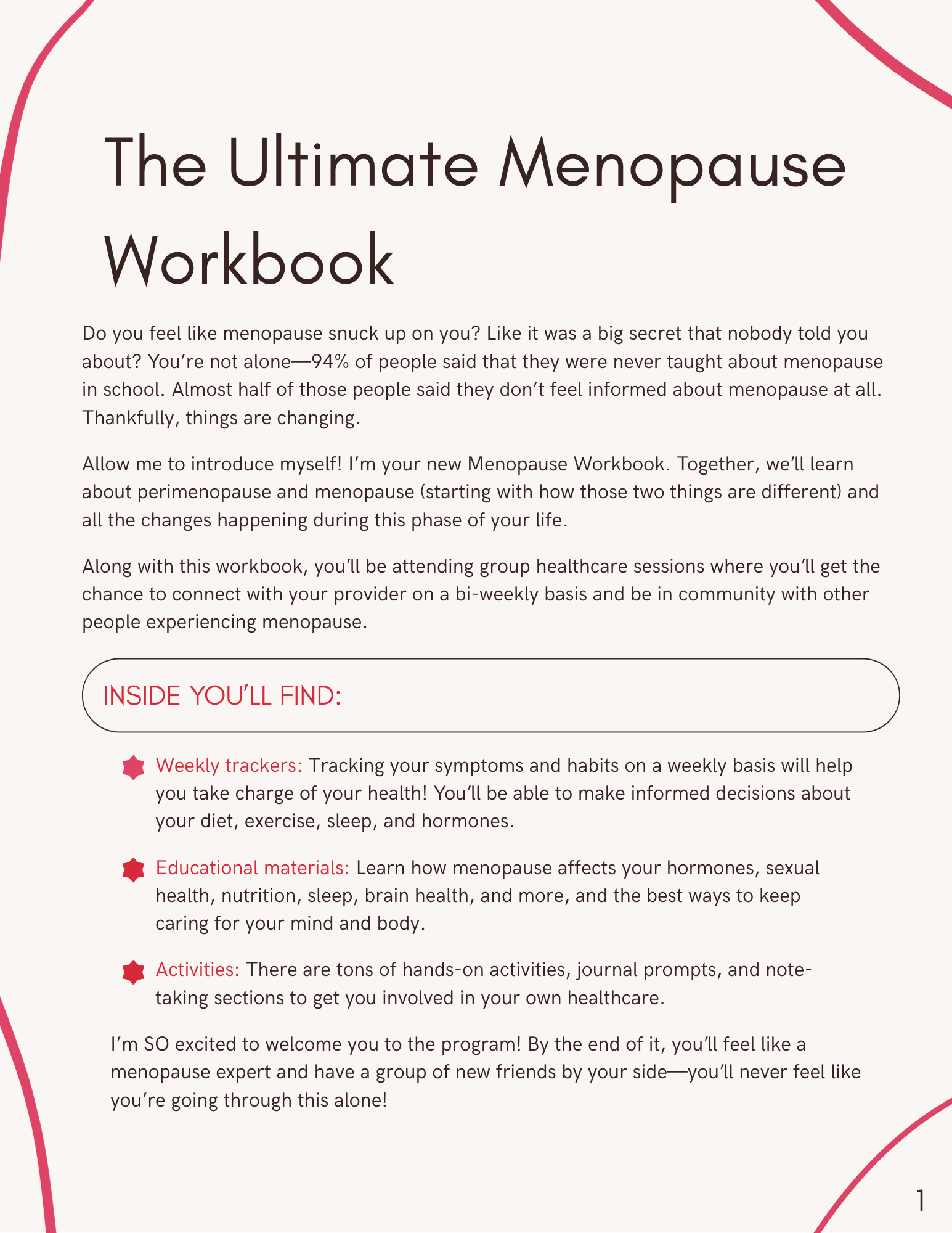
A note about work samples
To ensure client confidentiality, all work samples shown here are reworked examples of the original content.
These samples reflect my approach to patient-centered, accessible menopause education without containing any proprietary materials.
My Process
Content development
Collaborating directly with doctors from UCLA, we were able to develop a first draft that was both evidence-based and clinically sound. These things are great—essential for medical content—but we’re nowhere near done.
Once the doctors passed their content to me, I worked my magic (aka, development editing). This means I made sure the language was clear and easy to understand, without sacrificing any medical accuracy.
Breaking down complex topics so that everyone can understand them is one of my favorite aspects of writing for health companies.
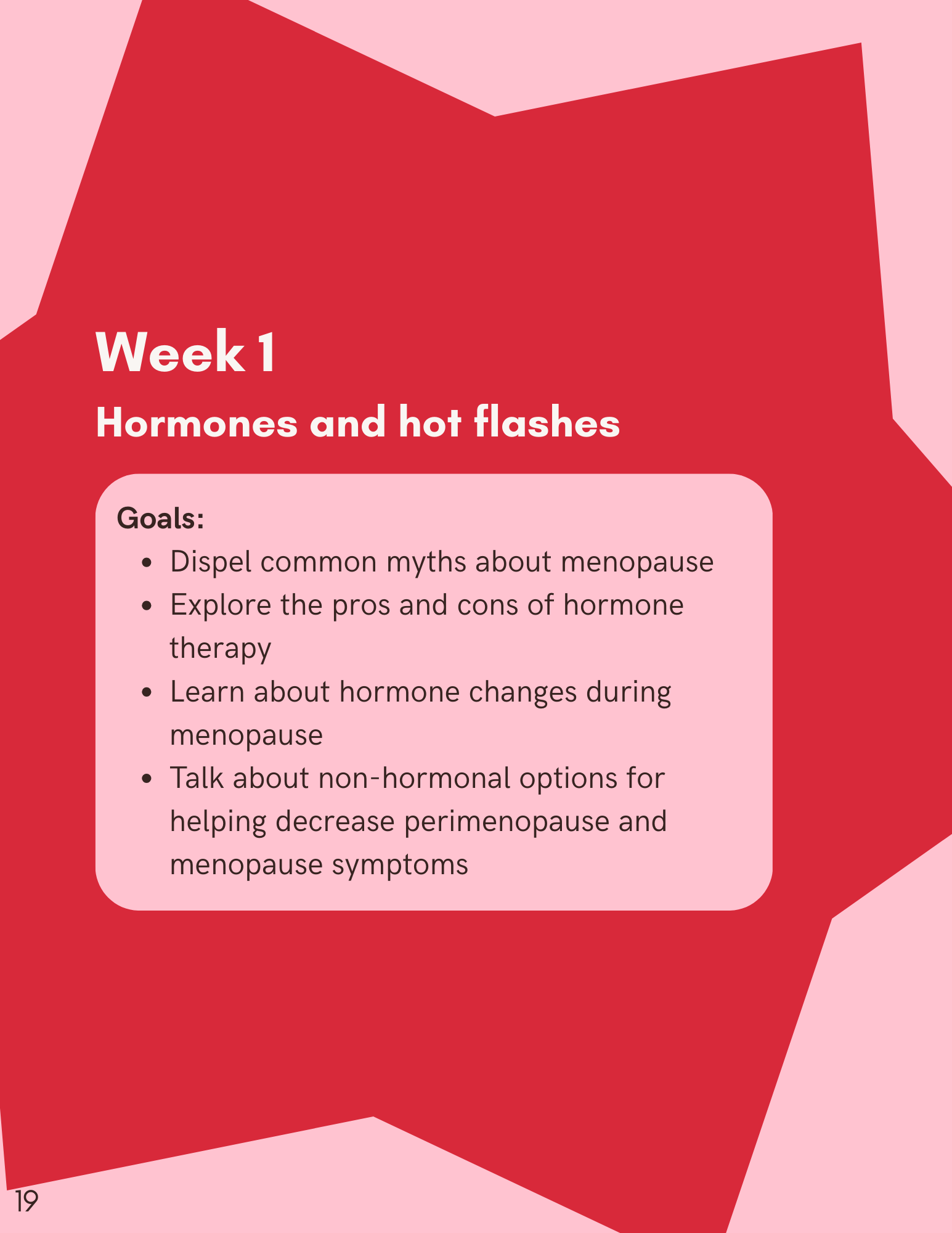
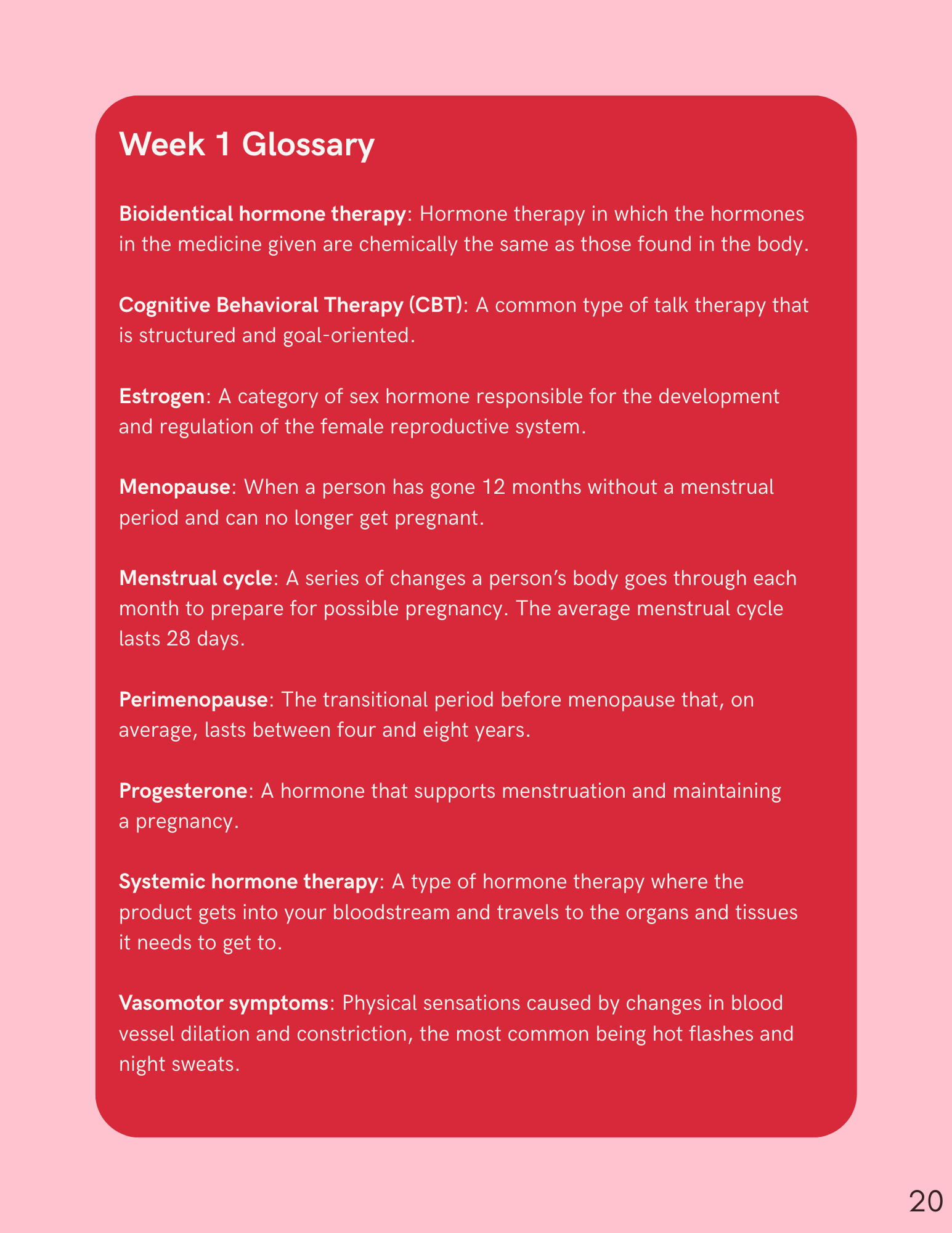
This usually involves rigorous research on my part, but in this case, I just had to make sure language stayed between a 5th to 7th grade reading level. I also tossed out medical jargon when possible, and if I couldn’t do that, I created a glossary of key terms.
Project-management
Not only am I creative—I’m also organized. Over the three-month project period, I served as our team’s internal project manager. I developed a timeline that worked both internally (with CHI) and externally (with UCLA) and accounted for the highly iterative nature of this project.
I coordinated first, second, and yes, third drafts, managed tight deadlines, and flagged all risks relating to scope, timing, and clarity. Because of this, our project was able to move quickly without sacrificing clinical accuracy or patient accessibility, resulting in a 150 page patient workbook.
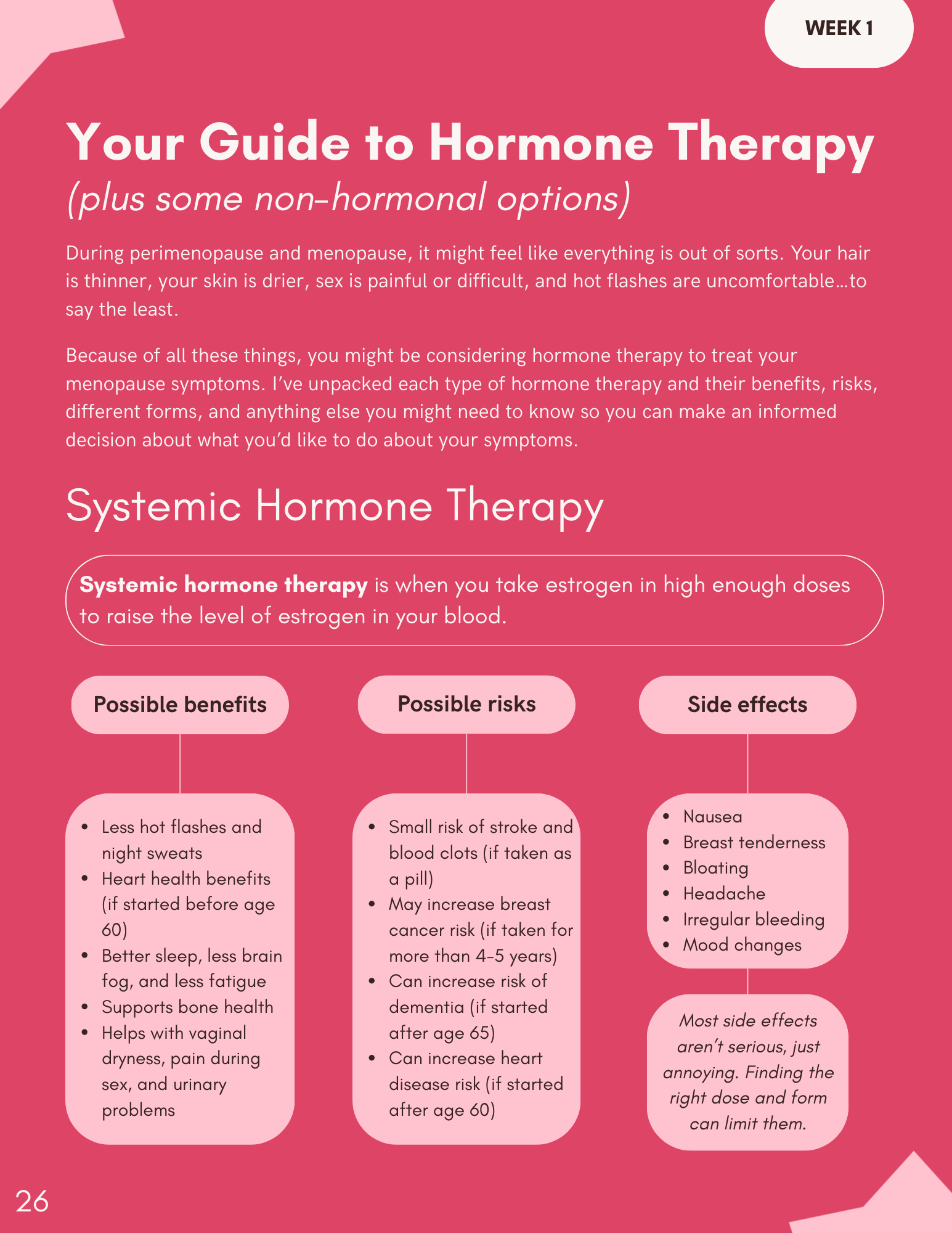
By the time I finished this workbook, it had over 60 pages of educational patient content.
Topics included:
Hormone replacement therapy
Menopause symptom management
Caring for your heart, gut, bone, and cognitive health
Mindfulness exercises and managing stress
All research-based and medically relevant, just easier to understand.
Educational patient-facing content
Outcomes
150-page patient workbook
Launched a new menopause-focused group care model
High levels of participant satisfaction
Developed a foundational resource for structured discussions, peer connection, and evidence based learning